
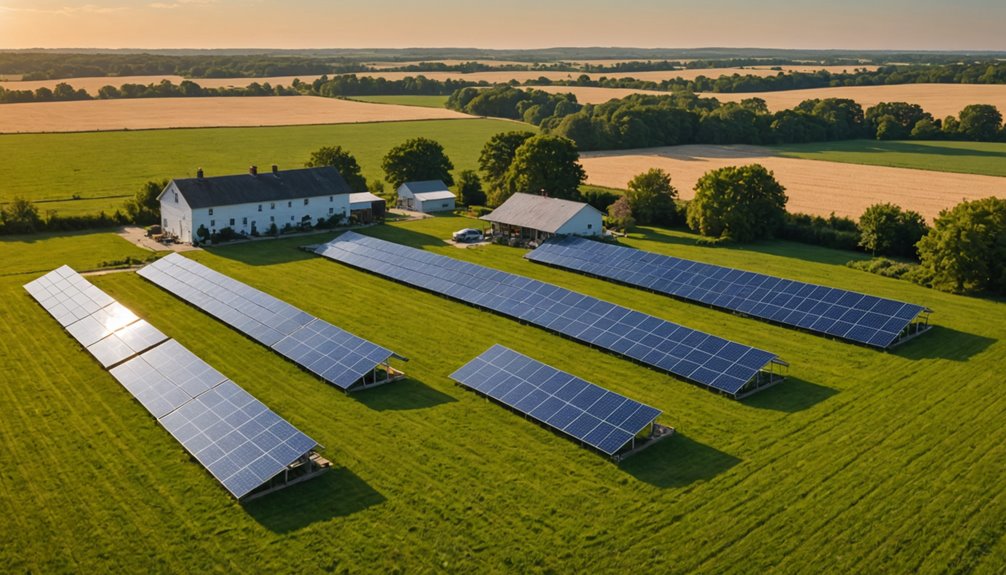
When considering solar energy, property owners typically choose between ground-mounted and rooftop systems.
Each configuration carries distinct advantages and limitations.
The appropriate choice depends on site-specific factors, available budget, and energy requirements.
A careful evaluation of both options is necessary before making a final decision.
Ground-Mounted vs. Rooftop Solar: What’s the Difference?
When choosing a solar energy system, two primary installation types exist: ground-mounted and rooftop. Each presents distinct technical and financial characteristics that warrant consideration.
Ground-mounted solar systems require dedicated land space, site preparation, and additional racking infrastructure, which typically increases upfront costs by 15-25% compared to rooftop alternatives. These systems, however, permit precise orientation and tilt adjustments to maximize solar exposure, which can improve overall energy output. Their ground-level positioning also simplifies routine inspection and maintenance procedures.
Rooftop solar installations utilize existing structural surfaces, reducing initial material and labor costs. Limitations include the existing roof angle, orientation, and shading from adjacent structures or vegetation, all of which can reduce system efficiency. Maintenance and inspection also present logistical challenges, as safe rooftop access generally requires specialized equipment or safety measures.
The appropriate choice depends on several property-specific factors, including available land, roof condition and orientation, local shading conditions, and budget constraints. Evaluating these variables against long-term energy production goals provides a basis for a well-informed decision. Regardless of which installation type is selected, qualifying homeowners may be eligible for a 30% federal tax credit on total installation costs, which can substantially offset the initial investment.
Rooftop Solar Pros and Cons: What Homeowners Actually Experience
Rooftop solar systems generally cost around 21% less per watt compared to ground-mounted installations, reducing upfront expenditure before any energy is generated. The use of existing roof structure eliminates the need for additional land allocation, and the permitting and installation processes tend to be less complex than alternative mounting configurations.
There are, however, measurable limitations to consider. Roof orientation, pitch, and surrounding shade coverage directly affect energy output and system efficiency. Access constraints also mean that routine maintenance, including cleaning and repairs, typically requires professional services, which contribute to the long-term cost of ownership.
Ground-Mounted Solar Pros and Cons: What Homeowners Actually Experience
Ground-mounted solar systems differ from rooftop installations in several measurable ways, with cost and performance being the most significant factors for homeowners to consider.
On the performance side, ground-mounted systems can be positioned at optimal angles and orientations regardless of roof configuration, which typically results in 15–25% greater annual energy output compared to rooftop alternatives. Their accessibility also makes routine maintenance and cleaning more straightforward, and the systems can generally be expanded in capacity if energy demands increase over time.
The primary drawback is cost. Ground-mounted systems average approximately $46,041 to install, compared to roughly $30,505 for rooftop systems—a difference of over $15,000. This gap can widen further when site-specific requirements apply, such as soil assessments or local permitting processes, both of which add to the overall project cost.
Whether this investment is justified depends on factors specific to each property and household, including current energy consumption, available land, local utility rates, and applicable incentives. The higher energy output may offset the cost differential over time, but the timeline for reaching that break-even point will vary depending on these variables. Homeowners should review detailed cost estimates and projected energy production figures before committing to either system type.
Which Solar System Costs More to Install?
Ground-mounted solar systems cost more to install than rooftop systems. Average installation costs are approximately $46,041 for ground-mounted systems compared to $30,505 for roof-mounted systems. The 15–25% cost difference is attributed to several factors, including site preparation, soil surveying, foundation work, and more complex permitting requirements.
Despite the higher upfront cost, ground-mounted systems can produce more energy and are generally easier to maintain, which may improve the overall return on investment over time. The financial viability of either option depends on local electricity rates and available incentives, making it worthwhile to evaluate both systems thoroughly before making a decision.
Does Ground-Mounted or Rooftop Solar Produce More Energy?
When comparing solar system types, energy production is an important consideration. Ground-mounted solar systems generally produce more energy than rooftop systems, with estimates suggesting an annual output difference of approximately 15%-25%. This advantage stems from the ability to adjust tilt angles and orient panels toward optimal sun exposure throughout the year. Additionally, ground-mounted systems typically experience better airflow around the panels, which helps reduce heat buildup and maintain efficiency.
Rooftop solar systems face certain limitations that can affect energy output. Fixed roof angles may not align with the ideal orientation for maximum sunlight capture, and shading from nearby structures or vegetation can further reduce performance. These factors vary depending on the specific property and location.
For those prioritizing energy output, ground-mounted systems offer more flexibility in positioning and configuration. However, rooftop systems remain a practical option where land availability is limited, and their performance can still be sufficient depending on site-specific conditions and energy needs.
Is Your Property Better Suited for a Roof Mount or Ground Mount?
Both roof-mounted and ground-mounted solar systems have distinct advantages and limitations that depend on property-specific conditions.
Roof condition and age are practical starting points. A roof nearing the end of its lifespan may require replacement before panels can be installed, adding cost and complexity to a roof-mount project. Ground-mounted systems avoid this concern but require sufficient open land that meets local setback and property line requirements.
In terms of energy output, ground-mounted systems generally perform better. They can be positioned and angled independently of roof orientation, allowing for optimal sun exposure throughout the day. Roof-mounted systems are constrained by the existing pitch, direction, and structural capacity of the roof.
Cost and installation complexity tend to favor roof mounts in most cases. They utilize existing structure, require no additional land use, and typically involve lower installation costs. Ground mounts involve additional materials, foundation work, and land preparation.
Regulatory considerations also vary by location. Zoning laws, homeowner association rules, and local permitting processes may restrict ground-mounted installations more than roof-mounted ones, or vice versa, depending on the jurisdiction.
The appropriate choice depends on a direct assessment of roof condition, available land, budget, local regulations, and energy output goals. Neither system is universally superior; suitability is determined by the specific characteristics of the property in question.
Will Permits or HOA Rules Limit Your Solar Options?
Permits and HOA rules are practical considerations that can affect the scope and design of a solar installation. HOA restrictions may govern panel placement and appearance, with some associations limiting options for both ground-mounted and rooftop systems. Ground-mounted installations generally require more extensive permitting due to zoning and land-use regulations, while rooftop systems typically involve a more straightforward approval process.
Consulting with the local building department prior to making any installation decisions allows homeowners to identify regulatory requirements early in the process. In a number of states, solar access laws establish legal protections that can limit the extent to which HOA restrictions apply to solar installations, though the specifics vary by jurisdiction.
Failing to obtain the necessary permits or HOA approvals can lead to financial penalties or a requirement to remove non-compliant installations. Securing all relevant approvals before beginning work reduces the risk of these outcomes and helps ensure the installation meets applicable standards.
Ground-Mounted vs. Rooftop Solar: How to Decide
Selecting between a ground-mounted and rooftop solar system depends on several measurable factors specific to each property and use case.
Energy Output
Ground-mounted systems typically generate 15–25% more energy than rooftop installations. This is largely because they can be positioned and angled precisely for maximum solar exposure, independent of roof orientation or pitch.
Installation Costs
Rooftop solar installations cost approximately 21% less per watt compared to ground-mounted systems. The reduced material requirements, particularly the absence of ground anchoring infrastructure, account for much of this difference.
Roof Condition and Structural Integrity****
A roof that is aging, damaged, or structurally insufficient may not support the added weight of solar panels. In such cases, a ground-mounted system is the more practical option, as it places no load on the building structure.
Roof Orientation
South-facing roofs with minimal shading provide conditions well-suited to rooftop installations. Roofs oriented in other directions or subject to significant shading may reduce system efficiency considerably.
Space Requirements
Ground-mounted systems require dedicated land area that is otherwise unusable for other purposes. Properties with limited open land may not be suitable candidates for this installation type.
Maintenance and Accessibility****
Ground-mounted systems are more accessible for routine cleaning and inspection, which can reduce long-term maintenance costs and help sustain consistent energy output over time.
Each factor carries different weight depending on the specific property conditions, available budget, and long-term energy consumption goals.