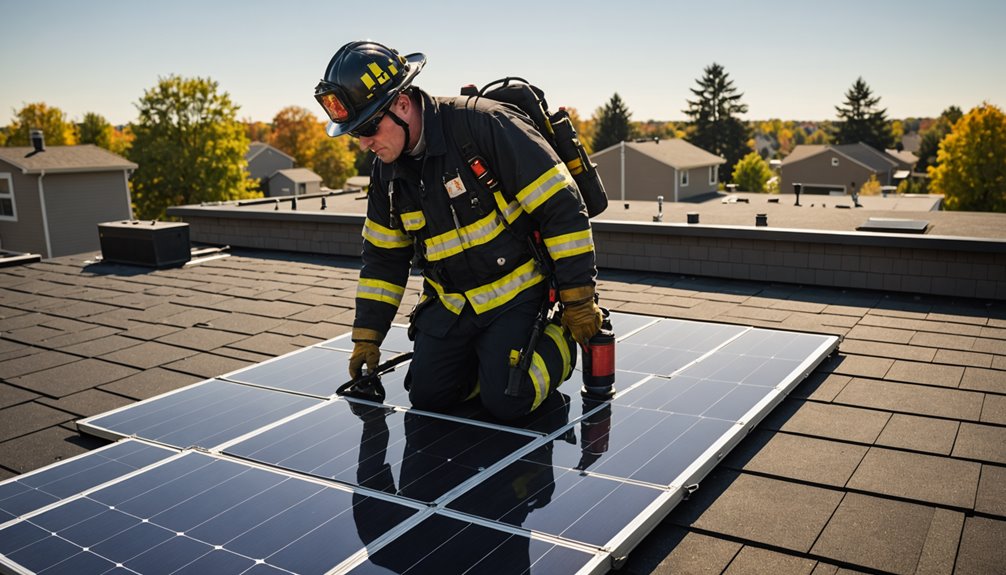
Solar panels can influence the fire risk profile of a roof in several measurable ways. The panels themselves are manufactured with fire-resistant materials and are generally assigned a fire rating, typically Class A, B, or C, which reflects their resistance to external fire exposure.
However, the installation process and the existing roof’s own fire rating are equally relevant factors. When panels are mounted on a roof, gaps between the panels and the roof surface can allow embers to accumulate, which presents a potential ignition risk in areas prone to wildfires.
Additionally, the electrical wiring and inverter systems associated with solar installations introduce potential points of failure that, if not properly installed and maintained, can lead to electrical fires.
The existing fire rating of a roof can also be affected by the addition of solar panels. A roof assembly that holds a Class A rating may see that rating reduced if the installed panel system has not been tested and certified as compatible with the specific roofing material.
Building codes in many jurisdictions require that the combined roof and panel system maintain the original fire rating of the roof. Proper installation by certified professionals, adherence to local building codes, and the use of panels that carry appropriate fire certifications are the primary measures that determine whether solar panels increase or maintain a roof’s fire safety profile.
Regular inspection of the electrical components also reduces long-term fire risk associated with system degradation.
Do Solar Panels Actually Increase Your Roof’s Fire Risk?
Solar panels introduce certain fire-related considerations for rooftop installations. The plastic backings used in many panels are combustible materials, which can contribute to fire spread if an electrical fault or external ignition source occurs. Testing has shown that panels installed on Class A-rated roofs have, in some cases, not met fire resistance standards, with results indicating measurable lateral fire spread. This can complicate firefighting efforts and may increase potential property damage in fire scenarios. Awareness of these factors supports informed decision-making regarding installation practices and the precautions that should be taken to reduce associated risks.
How Solar Panel Materials Affect Fire Spread
The materials used in solar panel construction influence how fire behaves and spreads across rooftop installations. Panels with plastic backing components contain combustible elements that can compromise the fire resistance rating of otherwise Class A-rated roof assemblies. When fire contacts panel surfaces, flame propagation patterns can shift direction, which may complicate suppression efforts by firefighters.
Electrical faults occurring near combiner boxes represent a documented ignition risk, as arcing can reach temperatures sufficient to ignite adjacent combustible materials, potentially escalating a localized fault into a more significant fire event.
Maintaining a gap between the roof surface and panel modules is one mitigation measure worth considering. Some research and installation guidelines suggest that a clearance greater than the commonly used 6 cm may reduce the rate at which fire spreads beneath panels, though specific gap requirements vary depending on installation standards, regional building codes, and panel design. Consulting applicable fire safety standards and manufacturer specifications remains the appropriate approach for determining suitable clearance dimensions for a given installation.
Why Your Roof Class Matters Before Installing Solar Panels
Roof classification is a critical factor in assessing fire risk when installing solar panels. Roofs are categorized into four classes, with Class 1 representing the highest level of fire resistance and the most suitable option for solar panel installation. Roofs with lower classifications frequently incorporate combustible insulation materials, which can contribute to the spread of fire.
It is worth noting that a Class A fire rating does not guarantee complete safety when solar panels are added. Laboratory testing has demonstrated that solar panels mounted on Class A-rated roofs can still fail fire resistance evaluations. This indicates that the interaction between roofing materials and solar panel systems introduces variables that standard roof ratings alone do not account for.
The National Electrical Code mandates compliance with roof class standards during solar panel installation, establishing a baseline for safety requirements. Selecting non-combustible roofing materials and conducting regular assessments of existing roof conditions are practical measures that can reduce the fire risk associated with solar panel systems. These steps do not eliminate risk entirely but contribute meaningfully to safer installation outcomes.
Why Certified Installers Reduce Your Solar Fire Risk
Selecting a certified installer—one recognized by the North American Board of Certified Energy Practitioners (NABCEP)—reduces fire risk by ensuring installation work meets established technical standards. Certified professionals adhere to National Electric Code guidelines, which have been adopted across all 50 states, and assess roof combustibility to determine suitable mounting systems. They also tend to avoid panels manufactured with low-quality, highly combustible plastic components.
Beyond the initial installation, certified installers perform routine inspections and address connector issues linked to supply chain disruptions, which are a documented source of electrical failures in solar systems. Hiring qualified professionals reduces the likelihood of installation errors and component failures that are known contributing factors to solar-related fire incidents.
Are Faulty Solar Connectors a Hidden Fire Hazard?
Faulty solar connectors can pose a fire risk in residential solar systems, particularly in installations completed between 2020 and 2023. During this period, pandemic-related supply chain disruptions led some installers to use incompatible cables and connectors, which can create electrical failure points over time. These incompatibilities may result in short circuits or electrical arcing, especially near combiner boxes, which are known ignition points in rooftop solar installations.
If thermal damage is suspected, a thermographic inspection can help identify problem areas. A licensed electrician with photovoltaic system experience is qualified to assess connector compatibility and carry out any necessary replacements. Addressing these issues brings systems into compliance with safety standards and reduces the likelihood of fire-related incidents tied to connector failure. Working with NABCEP certified installers ensures that connector compatibility and safety standards are verified from the outset, reducing the risk of these issues developing over the system’s lifespan.
What Happens If Your Solar System Catches Fire?
Solar panel fires present distinct hazards that differ from conventional roof fires. Active panels continue to produce electrical current during a fire event, creating ongoing electrocution risks for firefighters and complicating standard suppression approaches. The materials used in panel construction, including polymer backsheets and encapsulants, are combustible and can accelerate flame spread across the roof surface.
Installations completed before 2017 frequently lack rapid shutdown systems, which means electrical current cannot be quickly isolated during an emergency. This limitation restricts the response options available to fire crews. Newer installations are generally required to include rapid shutdown capabilities under updated electrical codes, allowing for faster de-energization of the system.
Structural damage in solar panel fires tends to be more extensive than in standard roof fires, partly due to the additional fuel load introduced by panel components and the difficulty of accessing affected areas. Property owners with solar installations should maintain documentation of their system’s specifications and shutdown procedures, and ensure this information is accessible to emergency responders. Coordinating with local fire departments in advance regarding system layout and shutdown locations is a practical measure that can reduce response time and limit damage during an incident.
How Often Should You Inspect Solar Panels for Fire Hazards?
Professional solar panel inspections should be conducted at a minimum of once every two years to identify and address potential fire hazards. These assessments typically cover critical system components, including PV panels, inverters, and combiner boxes, with a focus on detecting overheating components, damaged connectors, and thermal degradation.
Thermographic scanning is a standard diagnostic tool used during these inspections, as it can detect heat anomalies that may indicate developing fire risks before they become significant problems. Inspectors should also verify that the installation adheres to National Electrical Code (NEC) guidelines, as non-compliant or improperly installed systems carry a measurably higher fire risk.
Roof material compatibility is another factor that warrants evaluation during inspections. Roofing materials rated Class 1 demonstrate greater resistance to fire spread compared to lower-rated alternatives, making this assessment relevant to overall fire safety planning for solar installations.
How Solar Panel Fire Damage Affects Your Home Insurance
Regular solar panel inspections carry direct implications for home insurance coverage. Most standard policies include rooftop solar panels, though ground-mounted systems and carports typically require additional coverage provisions. Insurers, including AXA and Allianz, have noted that panels installed on combustible roofing materials present an elevated fire risk, which can influence a property’s insurability. Selecting non-combustible materials for roof assemblies generally aligns with insurer requirements and reduces this risk. Solar-related fires can spread rapidly and cause extensive property damage, meaning documented maintenance records and appropriate material choices can help preserve coverage eligibility and limit financial exposure in the event of a claim.