
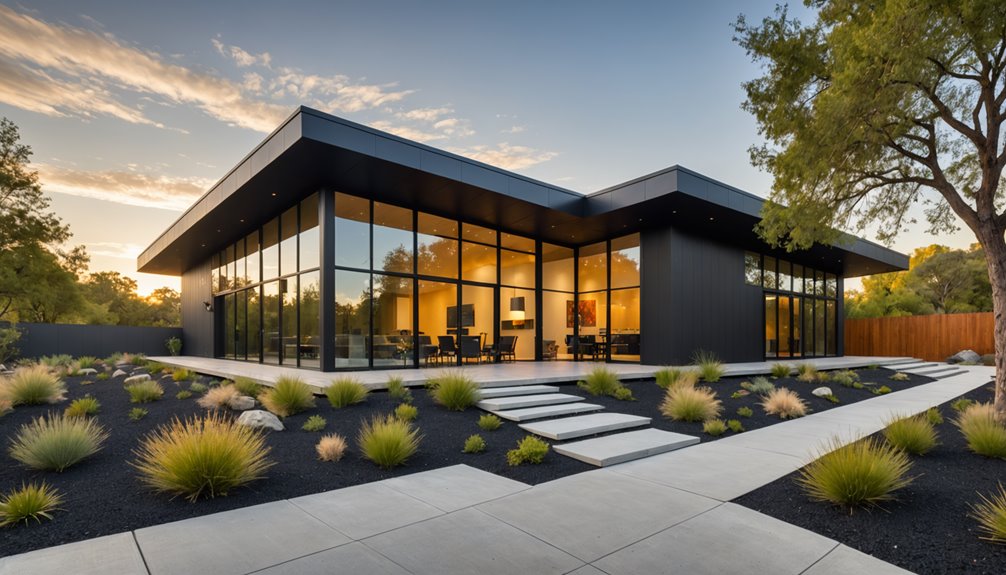
Solar integration in residential construction has evolved significantly beyond the addition of conventional rooftop panels. When approached during the design or renovation phase, solar systems can be incorporated into a home’s structural and aesthetic framework rather than added as a separate component after construction.
A home’s orientation, roof pitch, and shading conditions directly affect solar energy output. South-facing roof planes at angles between 15 and 40 degrees generally maximize sun exposure in the Northern Hemisphere. These factors are more effectively addressed during the design phase than after construction is complete.
Material options have also expanded. Building-integrated photovoltaics, or BIPV, include solar roof tiles and facade panels that function as both weatherproofing materials and energy-generating surfaces. Products such as solar shingles serve a dual structural and electrical purpose, though their per-watt cost typically exceeds that of conventional panel systems.
From a financial standpoint, the upfront cost of solar integration varies depending on system size, product type, and installation complexity. Federal tax incentives, currently set at 30 percent of installation costs under the Residential Clean Energy Credit, reduce the net investment.
Average payback periods in the United States range from six to twelve years, depending on local electricity rates and system performance.
Homeowners and architects working on new construction or significant renovations have more flexibility to optimize solar performance and visual coherence than those retrofitting existing structures.
Why Solar Integration Is the New Standard in Home Design
Solar integration has become increasingly common in modern home design. Homeowners now have access to a range of options beyond traditional rooftop panels, including Building-Integrated Photovoltaics (BIPV), which incorporate solar technology directly into roofing materials and building facades. Products such as solar shingles and canopies allow solar energy collection to be incorporated into a home’s structure without significantly altering its visual design. From an economic standpoint, solar integration can reduce household energy consumption and lower monthly utility costs, though savings vary depending on location, system size, and local energy rates. These developments reflect a broader trend toward energy-efficient housing, driven in part by rising energy costs and increased consumer interest in reducing dependence on traditional power grids. Homeowners who do make the switch can also benefit from a 30% federal tax credit applied to the total cost of their solar installation.
How Building Orientation Shapes Solar Performance
Building orientation is a significant factor in determining solar energy performance. In the Northern Hemisphere, south-facing roof surfaces receive the most consistent solar exposure throughout the day, making them the preferred orientation for solar panel installation. A roof pitch between 15 and 40 degrees is generally considered optimal for capturing solar radiation effectively across different seasons.
Obstructions such as trees, adjacent buildings, or architectural features can reduce the amount of sunlight reaching solar panels, directly affecting energy output. Careful site assessment prior to installation helps identify and account for these variables. Research indicates that favorable building orientation can increase solar energy production by approximately 30% compared to poorly oriented installations, underscoring its practical importance in the planning and design phase.
What Is BIPV and How Does It Blend Into Your Home?
Building-Integrated Photovoltaics (BIPV) refers to solar technology that is incorporated directly into building materials, such as roofing shingles, facade cladding, skylights, and window glazing. Unlike conventional solar panel systems, which are mounted onto existing structures as separate additions, BIPV components serve a dual function — acting as both structural building elements and electricity-generating systems.
One practical distinction of BIPV is its potential to offset material costs. Because BIPV replaces conventional building materials rather than supplementing them, the overall cost difference between the two approaches narrows compared to standard solar installations, though upfront costs remain higher in many cases.
From an aesthetic standpoint, BIPV integration tends to produce a less visually intrusive result than rack-mounted panels, as the technology conforms to the existing lines and surfaces of a structure. This makes it a relevant consideration for buildings where architectural appearance is a priority or where traditional panel installations may face regulatory or design constraints.
The durability of BIPV systems generally aligns with that of the building materials they replace, with many products rated for comparable lifespans to standard roofing materials, though performance can vary by manufacturer and installation conditions.
It is worth noting that BIPV systems are not universally applicable. Efficiency levels, installation complexity, and maintenance requirements differ depending on the building type, orientation, and climate, and these factors should be evaluated carefully before adoption.
Passive Solar Strategies That Reduce Energy Costs
Passive solar design reduces energy costs by using a building’s orientation, materials, and layout to manage heat gain and loss. Positioning a home’s main elevation toward the south increases exposure to sunlight during daylight hours, which can lower heating demands in colder months. Thermal mass materials such as concrete, brick, or stone absorb solar heat during the day and release it gradually at night, helping to stabilize interior temperatures without mechanical intervention.
Window placement influences both heat gain and natural ventilation. Strategically positioned openings allow cross-ventilation, which can reduce reliance on air conditioning during warmer periods. Roof overhangs, when correctly sized relative to window height and local sun angles, block high summer sun while permitting lower winter sun to enter, contributing to seasonal temperature regulation.
Large glazed wall systems increase natural light penetration and can support passive solar gain, though they also introduce potential heat loss depending on glazing quality and insulation values. Their effectiveness depends on climate conditions and the thermal performance specifications of the materials used.
When passive solar strategies are integrated with photovoltaic solar panels, a building’s overall energy consumption can decrease further. However, the extent of efficiency gains depends on factors including local climate, building size, insulation levels, and occupant behavior. Passive solar design is most effective when incorporated during the initial planning and design stages rather than retrofitted after construction.
Which Solar Materials Match Your Home’s Architecture?
When selecting solar materials, compatibility with a home’s existing architectural style is a practical consideration that affects both aesthetics and long-term satisfaction with the installation.
Building-Integrated Photovoltaics (BIPV), such as solar roof tiles and solar glass, are designed to function as structural components rather than additions mounted onto existing surfaces. This approach reduces visual disruption, particularly on homes where maintaining a consistent exterior appearance is a priority. Solar roof tiles, for example, replace conventional roofing materials while generating electricity, making them relevant for new construction or full roof replacements.
Conventional rooftop solar panels are available in varying profiles and finishes. Low-profile mounting systems reduce the gap between panels and the roof surface, which can minimize visual impact on certain roof types. Panel color and frame options—including all-black panels versus those with silver frames—allow for some degree of coordination with existing roofing and facade materials.
Modular solar systems can be configured to accommodate different roof geometries and sizes, which is relevant for homes with complex or non-standard architectural features.
The degree to which any solar product integrates visually depends on factors including roof pitch, surrounding materials, color contrast, and the orientation of the installation relative to primary sight lines. These are variable conditions that should be assessed on a case-by-case basis rather than assumed to produce uniform results across different building types.
Where to Install Solar Panels for Maximum Efficiency
Solar panel placement significantly influences overall system performance. Optimal installation typically involves a south-facing roof orientation with a slope between 15 and 40 degrees, which maximizes daily sun exposure in the Northern Hemisphere. Shading from trees or adjacent structures should be avoided, as even partial obstruction can meaningfully reduce energy output.
Roof orientation is a key determinant of how much solar radiation the system captures throughout the day. For situations where conventional panel mounting raises aesthetic concerns, Building-Integrated Photovoltaics offer an alternative that incorporates solar technology directly into roofing materials while maintaining comparable performance levels.
A professional site assessment from a qualified installer can provide an accurate evaluation of roof dimensions, structural suitability, and positional factors specific to your location. Additionally, the National Renewable Energy Laboratory’s PVWatts calculator is a reliable tool for estimating projected energy production based on installation variables such as location, tilt angle, and system capacity.
How to Make Battery Storage a Solar Design Feature
Battery storage systems have evolved beyond purely functional installations relegated to utility spaces. Modern units, such as the EcoFlow OCEAN Pro, feature compact, minimalist designs that can be positioned in living areas without visual disruption. Their modular construction allows them to fit within various interior layouts, and thermal insulation properties provide flexibility in placement without compromising operational efficiency.
Strategic placement of battery storage can serve a dual purpose: meeting energy storage requirements while contributing to the overall design of a space. This approach reflects a broader trend in home energy systems where manufacturers are prioritizing form alongside function. Warranty terms on higher-end units tend to be longer, which corresponds with demonstrated product durability and reliability data.
Integrating battery storage into visible areas of a home shifts its role from a concealed utility component to a visible element of a home’s energy infrastructure. This integration requires consideration of spatial constraints, ventilation needs, and aesthetic compatibility with existing interiors.
Does Solar Integration Actually Pay Off?
The financial viability of solar integration depends on several measurable factors. Solar panels can reduce monthly electricity bills by 10% to 30%, depending on system size, local utility rates, and household energy consumption. The federal Solar Investment Tax Credit, currently set at 30% for residential installations, offsets a portion of upfront costs and improves the overall return on investment. Studies, including research from the Lawrence Berkeley National Laboratory, indicate that solar installations can increase a home’s resale value, with buyers generally willing to pay a premium for properties with lower projected energy costs. The actual payback period varies based on installation costs, local incentives, net metering policies, and energy usage patterns, but typically ranges from six to twelve years. Over the full lifespan of a solar system, which averages 25 to 30 years, the cumulative savings can substantially exceed the initial investment. These factors collectively suggest that solar integration can be financially advantageous, though individual outcomes will vary based on geographic location and specific household circumstances.
How Integrated Solar Design Increases Resale Value
Integrated solar design has been shown to positively affect home resale value. Research indicates that homes with solar installations can sell for approximately 4% to 6% more than comparable properties without solar. Market data also suggests that a significant portion of homebuyers consider solar energy systems a desirable feature when evaluating properties, which can contribute to reduced time on the market.
Building-Integrated Photovoltaics (BIPV), which incorporate solar technology directly into structural elements such as roofing and facades, may offer additional appeal due to their visual integration with the home’s architecture compared to traditional panel installations.
From an appraisal standpoint, solar installations can contribute to higher assessed property values. Appraisers may account for the long-term energy cost reductions associated with solar systems when determining a home’s market value, though the degree to which this is reflected varies by region and appraiser methodology.
It is worth noting that the actual impact on resale value depends on several factors, including local energy costs, system ownership structure, installation quality, and regional market conditions. Leased solar systems, for example, may complicate the sale process and do not consistently produce the same value increases as owned systems. Prospective sellers should consult local real estate professionals and appraisers to obtain a realistic assessment of how solar integration may affect their specific property’s market value.
Thin-Film Cells, Smart Glass, and the Next Wave of Solar Home Tech
Thin-film solar cells represent a category of photovoltaic technology characterized by their reduced weight and material flexibility compared to conventional silicon panels. These properties make them suitable for building-integrated photovoltaic applications, particularly on non-planar surfaces such as curved facades and architectural elements where rigid panels cannot be installed.
Smart glass incorporates photovoltaic or electrochromic properties that allow it to generate electricity while managing solar heat gain and visible light transmission. This dual function contributes to measurable reductions in both energy generation costs and cooling loads within a building.
When applied collectively, thin-film cells and smart glass installations have been documented to offset a portion of a building’s total energy consumption, with estimates suggesting contributions of up to 30% depending on installation scope, geographic location, and building design.
Solar roof tiles serve as an additional building-integrated option, designed to conform to standard roofline profiles while incorporating photovoltaic functionality. Unlike conventional rooftop panel systems, solar tiles are manufactured to replace standard roofing materials rather than mount above them.
These technologies reflect ongoing development in the building-integrated photovoltaics sector, where the focus has shifted toward embedding energy generation capacity directly into standard construction components rather than treating solar collection as a separate, externally added system.