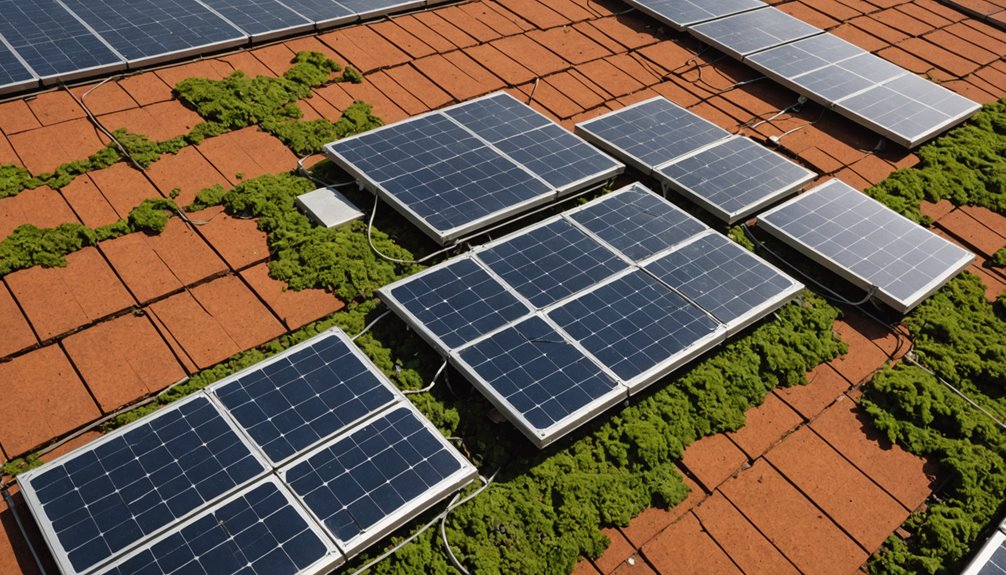
Rooftop solar systems are typically designed with a 25-year operational lifespan, during which they are continuously exposed to environmental conditions that can degrade performance over time. Several weather-related factors contribute to this degradation in measurable ways.
Elevated temperatures reduce photovoltaic cell efficiency. Most solar panels lose approximately 0.3% to 0.5% of their output capacity for every degree Celsius above their rated operating temperature, a figure documented in manufacturer specifications and independent research.
Dust and particulate accumulation on panel surfaces reduces the amount of sunlight reaching the cells. Studies conducted in arid and semi-arid regions have recorded output reductions of 15% to 25% in the absence of regular cleaning, with losses varying based on local dust composition and rainfall frequency.
High-wind events, hail, and heavy rainfall place mechanical stress on mounting systems, panel frames, and junction boxes. While modern installations are engineered to meet local weather resistance standards, repeated exposure to severe conditions can accelerate wear on seals, fasteners, and structural components.
Humidity and thermal cycling — the repeated expansion and contraction of materials as temperatures rise and fall — contribute to micro-cracking in cells and gradual deterioration of encapsulant layers over the system’s lifespan.
These factors do not operate in isolation. Their combined, cumulative effect on system output and component longevity represents a practical consideration for anyone evaluating the long-term return on a solar installation.
Regular monitoring, maintenance, and site-specific assessments are standard methods used to manage these risks.
Which Regions Face the Greatest Long-Term Weather Risk for Rooftop Solar?
Regional climate conditions significantly influence the long-term performance and durability of rooftop solar installations. Arid regions with high temperatures, such as Rajasthan and Gujarat, subject solar panels to greater thermal stress, with degradation rates reaching approximately 0.88% annually, compared to around 0.48% in cooler climates. This accelerated degradation reduces energy output and shortens the effective lifespan of the system.
Coastal regions present a distinct set of challenges, primarily salt-laden air, which promotes corrosion of metal components and electrical connections over time. High-humidity environments similarly increase the risk of moisture infiltration, particularly at connector points, which can lead to electrical faults if systems are not adequately sealed and maintained.
Areas prone to dust storms face periodic reductions in solar panel output, with performance losses documented between 10% and 25% during and following such events. Without consistent cleaning and maintenance schedules, these losses can accumulate and compound over the system’s operational life.
Regions subject to severe weather events, including hail and high-wind conditions, introduce mechanical risks that standard residential solar installations may not fully accommodate without reinforced mounting and panel specifications.
Taken together, these regional climate variables directly affect maintenance requirements, component selection, and the projected return on investment for rooftop solar systems. Accurate assessment of local environmental conditions is a practical consideration in evaluating the long-term viability of solar installations in any given location. Well-designed residential systems that account for local climate conditions are built to last, with 25-year performance warranties offering homeowners long-term assurance on energy output and system reliability.
Why Heat Is the Biggest Silent Threat to Rooftop Solar Efficiency?
Heat remains one of the most consistently damaging and underrecognized factors affecting rooftop solar panel performance. For every degree Celsius above 25°C, solar panels lose approximately 0.36% of their efficiency — a figure that accumulates meaningfully in warmer climates. Regions such as North Carolina or Rajasthan regularly expose panels to temperatures exceeding 65°C (150°F), conditions under which voltage output declines measurably and sustained energy production falls below rated capacity.
Research indicates that rooftop solar systems operating in high-temperature environments experience an annual degradation rate of approximately 0.88%, which is roughly double the rate observed in cooler climates. This accelerated degradation is not solely a function of reduced output during peak heat exposure. Prolonged thermal stress also contributes to the formation of micro-cracks within photovoltaic cells, causing structural and electrical damage that compounds over time and cannot be reversed through standard maintenance.
Unlike visible forms of damage such as soiling or physical impact, heat-related degradation tends to develop gradually and without obvious signs, making it difficult to detect without performance monitoring tools. This gradual nature means that cumulative losses are often identified only after efficiency has already declined significantly.
Selecting panels with lower temperature coefficients is a practical and evidence-supported approach to reducing heat-related losses. A lower coefficient indicates that the panel retains a greater proportion of its rated output as temperatures rise, which directly improves long-term performance reliability in thermally demanding environments.
How Dust and Pollution Quietly Cut Rooftop Solar Output?
Dust and pollution are significant contributors to reduced rooftop solar output, often operating gradually and going unnoticed until measurable performance losses occur. Dust accumulation on panel surfaces physically obstructs incoming sunlight, with research indicating energy output reductions ranging from 10% to 25% depending on exposure levels and cleaning frequency.
In urban environments, particulate matter from vehicle emissions and construction activity accelerates the rate of surface soiling, causing panel efficiency to decline at a faster rate compared to cleaner settings. Arid and semi-arid regions face an additional layer of concern, where sand deposits compound standard dust accumulation, further reducing light transmission to photovoltaic cells.
The cumulative effect of soiling loss is well-documented in the context of Indian rooftop solar installations, where the combination of high dust levels, urban pollution, and irregular maintenance schedules creates conditions for consistent underperformance. Studies identify soiling as one of the primary operational challenges affecting solar energy yield in the country.
Without a structured cleaning and maintenance schedule, system owners risk ongoing performance degradation that may not be immediately visible but registers clearly in energy output data over time. Regular panel cleaning, supported by periodic performance monitoring, is therefore a practical and necessary component of effective solar system management rather than an optional measure.
How Monsoons and Rainfall Shape Annual Solar Production?
Monsoon season significantly reduces solar energy production, with daily generation declining by up to 50% due to sustained cloud cover that limits direct sunlight exposure over extended periods. This reduction affects annual output targets, particularly when solar energy systems have not been designed to account for seasonal variability. Accurate system planning requires incorporating these low-output periods into production forecasts to maintain realistic annual yield expectations.
Rainfall during monsoon season does provide a secondary benefit by removing accumulated dust and debris from panel surfaces, which can marginally improve panel efficiency following precipitation events. This natural cleaning effect partially offsets some efficiency losses, though it does not compensate for the broader reduction in solar irradiance during the season.
Effective performance management during monsoon periods involves maintenance schedules and system configurations that reflect predictable seasonal output patterns. Accounting for these conditions during the design phase allows for more reliable long-term production estimates and reduces the gap between projected and actual energy generation.
What Extreme Weather Does to Solar Panels Long-Term?
Extreme weather events, including high winds and hail, contribute to both immediate damage and long-term degradation in solar panels. Hailstones exceeding 25 mm in diameter and wind speeds above 90 km/h are associated with accelerated performance losses. Research from the National Renewable Energy Laboratory (NREL) indicates that while short-term outages tend to remain limited, cumulative mechanical stress from repeated exposure reduces energy output over time.
Common long-term effects include micro-cracking in photovoltaic cells, delamination of panel layers, and corrosion within frames and electrical components. These issues develop progressively and may not be immediately visible following a weather event. Reinforced frames and tempered glass reduce vulnerability but do not eliminate the risk of structural degradation under repeated stress.
Proper installation practices, including secure mounting systems and appropriate site positioning, can reduce exposure to mechanical stress. However, installation quality alone does not prevent long-term performance decline. Routine post-event inspections allow for early identification of damage, which supports timely intervention before minor issues develop into more significant and costly failures.
How Your Climate Zone Sets the Ceiling on Panel Longevity?
Climate zone is a primary determinant of solar panel longevity, operating independently of installation quality or structural reinforcements. Research indicates that panels in hotter regions experience degradation rates of approximately 0.88% annually, compared to 0.48% in cooler climates — a measurable difference that compounds significantly over a system’s operational lifespan.
Specific environmental conditions within each climate zone introduce distinct stress factors. Coastal environments expose panels to salt-laden air, which accelerates corrosion in standard materials, making corrosion-resistant components a practical necessity rather than an optional upgrade. High-humidity regions create conditions favorable to moisture infiltration in electrical connections, requiring sealed junction boxes and waterproofed wiring to maintain system integrity. Cooler climates, by contrast, reduce the frequency and intensity of thermal cycling, which mechanically stresses panel materials over time, resulting in comparatively lower degradation rates.
Mitigation strategies tied to specific climate conditions include adjusting panel tilt angles to manage precipitation and debris accumulation, selecting materials rated for regional environmental exposures, and applying appropriate sealing to prevent moisture ingress. These measures do not eliminate climate-driven degradation but can reduce its rate and prevent premature system failures.
The data suggests that climate zone assessment should be a foundational step in solar system planning, informing material selection, maintenance schedules, and realistic performance projections over the intended service life.
How Much Output You’ll Lose Each Year: And What It Costs You?
Solar panels experience a consistent decline in output over time, a process known as performance degradation. On average, rooftop solar systems lose approximately 0.75% of their output annually, with systems in hotter climates recording slightly higher rates of around 0.88% per year. Exposure to extreme weather conditions can accelerate this decline, compounding efficiency losses over the lifespan of the system.
Maintenance practices play a measurable role in how quickly degradation occurs. Accumulated dust on panel surfaces can reduce energy production by up to 25% if left unaddressed. Temperature also directly affects output: for every degree Celsius above 25°C, panels lose approximately 0.36% in efficiency.
The financial consequences of these losses are worth noting. Reduced output translates to lower energy generation, which increases reliance on grid electricity and raises utility costs. It also extends the timeline for recovering the initial investment in the system. Monitoring degradation rates and maintaining the system on a regular basis are practical measures that support consistent performance and help protect the long-term financial value of the installation.
Why Tilt Angle and Mounting Design Limit Weather Damage?
The positioning and mounting of solar panels influence their long-term resistance to weather-related damage. Tilt angle affects solar exposure, seasonal energy capture, and the natural drainage of rain and snow, which reduces the risk of water accumulation and associated damage. It also limits debris buildup, which research indicates can reduce energy output by approximately 3–4% annually.
Mounting design determines how well a system withstands structural stress during extreme weather events. Cyclone-rated mounting systems are engineered to handle wind loads up to 56 mph, reducing the likelihood of mechanical failure during storms.
Both tilt angle and mounting design are therefore functional considerations with measurable effects on system durability and performance over time.
How Monitoring Systems Catch Weather-Related Output Drops Early?
Monitoring systems track solar output continuously, comparing real-time generation data against expected performance benchmarks based on historical patterns and weather conditions. When output drops below established thresholds due to weather-related factors such as cloud cover, precipitation, or dust accumulation, the system generates alerts that allow for timely maintenance responses.
These systems collect and analyze environmental data alongside production metrics, enabling operators to identify correlations between specific weather conditions and output reductions. This data supports more informed decisions around maintenance scheduling, including adjusting panel cleaning frequency based on seasonal weather patterns and local environmental conditions.
Regular performance reviews using accumulated monitoring data help quantify the long-term effects of weather exposure on panel efficiency. This information contributes to more reliable energy yield projections and financial planning, as operators can account for weather-related variability with greater accuracy.
Early detection of performance deviations reduces the duration of suboptimal output by allowing maintenance interventions before minor issues develop into more significant degradation. The data gathered over time also provides a basis for evaluating whether observed output reductions fall within expected weather-related ranges or indicate equipment issues requiring separate attention.
What Cleaning and Maintenance Schedules Prevent Long-Term Loss?
Structured cleaning and maintenance schedules are essential for preserving solar panel output over time. Dust accumulation alone can reduce energy production by 10%–25%, with the higher end of that range more likely in dry or urban environments where particulate matter settles more densely on panel surfaces. Regular cleaning intervals should be determined based on local conditions, with more frequent cleaning warranted in arid or high-pollution areas where rainfall is insufficient to clear debris naturally.
Formal inspections conducted at minimum twice per year allow for identification of physical and electrical issues including debris buildup, micro-cracks, and early-stage corrosion. Addressing these findings promptly prevents compounding efficiency losses that become more costly to remediate over time. Relying on rainfall as a passive cleaning mechanism is generally inadequate in low-precipitation climates and should not substitute for scheduled manual cleaning.
Consistent adherence to a maintenance schedule supports several measurable outcomes: sustained energy output relative to system capacity, reduced likelihood of component failure, and an extended operational lifespan for the overall system. When combined with performance monitoring, routine maintenance enables more accurate identification of whether output degradation stems from soiling, mechanical damage, or systemic decline, allowing for more targeted and cost-effective responses.