Installing solar panels in California requires obtaining several permits before the system can legally operate.
These permits are mandated at the state, county, and municipal levels, and the specific requirements vary depending on the location and scope of the installation.
Failing to secure the necessary permits can result in fines, mandatory system removal, or complications when selling the property.
Understanding which permits apply to a given project is a practical step toward avoiding delays and additional costs.
What Types of Permits Does California Require for Solar?
California requires three primary permits for solar installations: building permits, electrical permits, and in some cases, zoning or fire safety permits. Building permits verify that a solar photovoltaic (PV) system meets applicable structural standards, while electrical permits confirm that wiring and grid connections comply with safety codes. These requirements are governed by local regulations and standards established by the California Energy Commission.
Permit fees generally range from $100 to $600, varying by jurisdiction. Processing timelines typically fall between one and eight weeks, though certain jurisdictions have provisions for same-day approvals. Zoning or fire safety permits may be required depending on the specific location of the property and applicable community regulations. Working with a team of NABCEP certified installers ensures that all permits and paperwork are handled correctly throughout the approval process.
What Do Building and Electrical Permits Actually Cover?
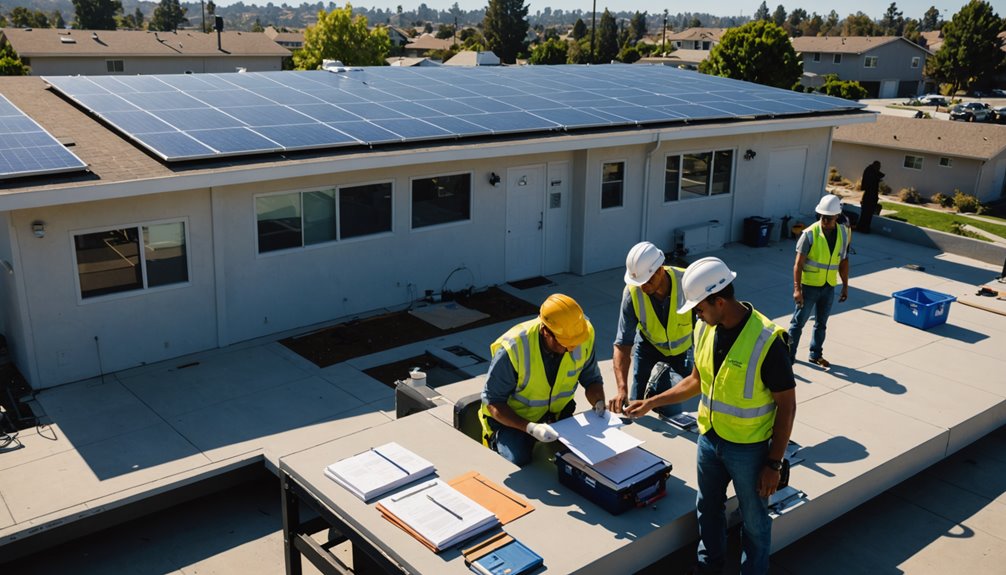
Building and electrical permits serve distinct regulatory functions within the solar installation process. Building permits address structural concerns, verifying that a roof can bear the load of rooftop solar equipment in accordance with local building codes. This process typically requires documentation such as property layout diagrams and structural assessments, along with inspections conducted prior to installation work.
Electrical permits fall under the jurisdiction of the National Electrical Code (NEC) and address the technical requirements for wiring, grounding, and system compatibility. Applicants must submit detailed electrical schematics, and the installation is subject to inspection to confirm adherence to established safety standards.
Both permit types function as independent verification mechanisms. Building permits assess structural adequacy, while electrical permits confirm that the system’s components and configurations meet defined safety criteria. Compliance with both is generally required before a solar installation can be legally commissioned.
Zoning, Fire, and Encroachment Permits for California Solar
Solar installations in California may require additional permits beyond standard building and electrical approvals, depending on the project’s location and scope. These include zoning, fire, and encroachment permits, each serving a distinct regulatory function.
Zoning permits verify that a solar installation aligns with local land use regulations. These requirements are particularly relevant in residential zones or historically designated areas, where local authorities may impose specific restrictions on structure placement, height, or visual impact.
In regions classified as high fire hazard severity zones, fire safety permits confirm that the installation meets applicable fire codes. California’s fire-prone environment has prompted stricter standards for setbacks, panel placement, and access pathways on rooftops to allow for emergency response.
Encroachment permits apply when installation activities extend into public rights-of-way, such as sidewalks or roadways. These permits ensure that temporary or permanent impacts to public infrastructure remain within established guidelines.
Permit requirements differ across California jurisdictions, and local authorities are the appropriate point of contact for determining which permits apply to a specific project. Proceeding without required permits can result in financial penalties, project delays, or mandatory system removal. Identifying applicable permit requirements early in the planning process reduces the likelihood of complications during or after installation.
How Much Do California Solar Permits Cost?
California solar permit costs typically range from $100 to $600, with most homeowners falling within the $200 to $500 range. These fees cover several distinct permit categories, including building permits, electrical permits, and zoning permits, each of which may carry separate fees depending on the jurisdiction.
Inspection fees represent an additional cost that must be factored into the overall budget, as local authorities require inspections before permit approval is granted. Because fee structures vary across California’s numerous municipalities and counties, homeowners should consult their local authority having jurisdiction to obtain accurate cost estimates for their specific location.
For those seeking to reduce administrative burden and potential costs, SolarAPP+, a standardized online permitting platform, offers an expedited application process that some jurisdictions have adopted to simplify solar permit approvals.
How to Apply for Solar Permits in California
Applying for solar permits in California involves submitting a permit application package containing property details, system specifications, and structural load assessments. Building permits are required to confirm that the structure can support the installation load, while electrical permits ensure compliance with the National Electrical Code. Certain installations may also require zoning permits when they affect community aesthetics or land-use regulations.
Processing times for permit approvals generally range from one to eight weeks, depending on the jurisdiction and application volume. The SolarAPP platform can reduce approval timelines for eligible projects by automating the review process. Permit fees typically fall between $100 and $600, with most applications costing between $200 and $500. The final cost depends on the complexity of the installation and the specific requirements of the local jurisdiction. Consulting your local jurisdiction’s guidelines before submitting an application helps ensure that all required documentation is in order and reduces the likelihood of delays or rejections.