California residents face measurable grid reliability challenges stemming from wildfire-related shutdowns, aging transmission infrastructure, and utility-managed Public Safety Power Shutoffs (PSPS).
These factors have contributed to an increase in unplanned outages, particularly in high-risk fire zones.
Home battery backup systems offer a practical mitigation option, though selecting an appropriate system requires careful evaluation of several variables, including storage capacity, inverter compatibility, installation costs, and eligibility for state and federal incentive programs such as the Self-Generation Incentive Program (SGIP) and the federal Investment Tax Credit (ITC).
Making an uninformed purchasing decision can result in significant financial loss, as installed systems typically range from $10,000 to $30,000 or more depending on capacity and configuration.
Why California Power Outages Are Getting Worse
California’s power grid faces mounting challenges from several converging factors. Aging infrastructure struggles to meet increasing electricity demand, particularly during periods of extreme weather. Utility companies implement Public Safety Power Shutoffs during elevated wildfire risk conditions, which can leave residents without power for extended periods. High temperatures drive increased air conditioning usage, placing significant strain on the grid and contributing to rolling blackouts. California recorded 27 weather-related disasters in 2024, with many resulting in damages exceeding $1 billion. Scheduled maintenance outages contribute additional service interruptions throughout the year. These outages carry practical consequences for residents, ranging from food spoilage and loss of climate control to disruptions in medical equipment operation. Home battery systems provide instant power during outages without requiring any manual reset, allowing households to maintain continuous electricity when the grid goes down. As a result, battery backup systems have become an increasingly common consideration for homeowners seeking to maintain power during grid failures.
Solar Battery Backup vs. Generator: Which Fits Your Home?
When choosing between a solar battery backup and a generator, key factors include upfront costs, long-term expenses, and performance during extended outages. Home battery systems typically cost $10,000–$20,000, while generators range from $7,000–$15,000. Solar battery backups eliminate ongoing fuel costs by recharging through solar panels, whereas generators require a continuous fuel supply and produce emissions. Battery systems generally have a lifespan of 10–15 years, while generator longevity varies based on usage and maintenance. For homeowners in regions with frequent power outages, such as California, the choice between the two depends on individual priorities, including energy independence, environmental considerations, and budget constraints.
The Real Costs of Home Battery Backup in California
Home battery backup systems in California typically cost between $10,000 and $20,000 installed, which is generally higher than comparable standby generators. When paired with solar panels, the financial calculation becomes more nuanced. These systems can reduce electricity costs by avoiding peak-rate charges, store excess solar energy for later use, and eliminate the need for fuel during power outages.
Most home battery systems come with warranties ranging from 10 to 15 years, though battery degradation may require replacement before the solar panels themselves need servicing. California’s documented increase in grid outages, largely attributed to wildfire-related events and climate conditions, has made backup power a practical consideration for many homeowners rather than a purely optional upgrade.
The upfront cost remains a significant factor. However, when accounting for long-term savings generated through solar integration, reduced utility bills, and avoided generator fuel expenses, the total cost of ownership can become more competitive over time. State and federal incentive programs, including the federal Investment Tax Credit, may further reduce the net cost. Prospective buyers should evaluate their specific energy usage, local utility rates, and outage history to determine whether the investment aligns with their financial circumstances.
Does the Federal Tax Credit Apply to Home Batteries?
The Inflation Reduction Act established a 30% federal tax credit for qualified battery storage installations. To be eligible, battery systems must be installed in conjunction with solar panels. The credit applies to systems connected to a home’s electrical infrastructure and designated for residential use. Tax circumstances differ between homeowners, so consulting a tax professional is advisable to determine eligibility and ensure the credit is applied correctly to a battery storage installation.
How Solar Panels and Battery Storage Work Together
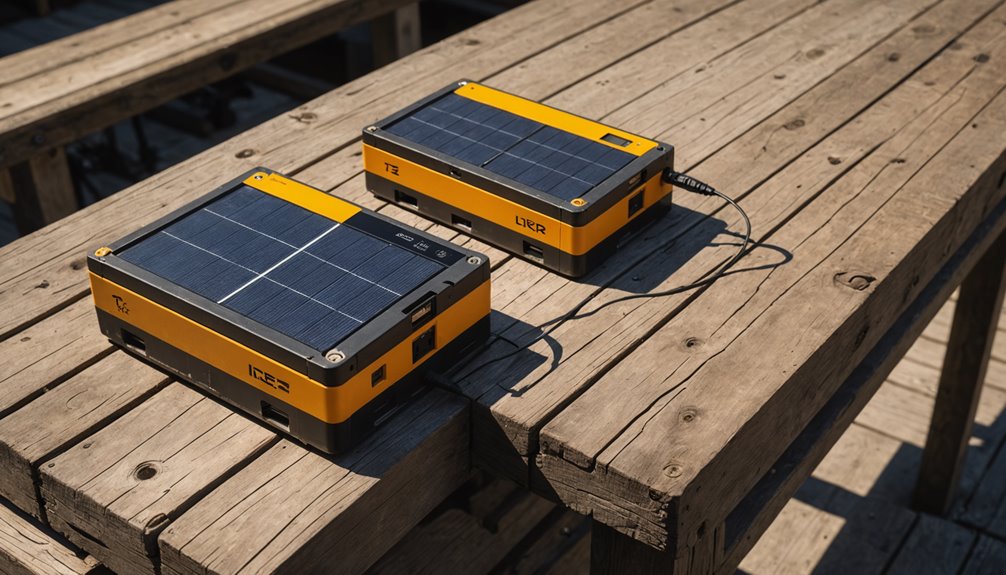
Solar panels generate electricity during daylight hours, while a battery system stores excess energy not immediately consumed by the household. This stored energy can be drawn upon during grid outages or during periods of higher electricity rates, such as evening peak hours. Depending on battery capacity and household energy consumption, stored power may sustain basic home operations for an extended period without grid support. Some utility programs also allow homeowners to send stored energy back to the grid during peak demand periods in exchange for compensation. Used in combination, solar panels and battery storage can reduce dependence on grid-supplied electricity and provide a degree of energy stability in areas where grid reliability is inconsistent.
How Long Can a Home Battery Actually Power Your House?
Home battery backup systems have a runtime that varies significantly based on capacity and the power demands of connected devices. A Tesla Powerwall, with its 13.5 kWh capacity, illustrates this variability clearly. Running a 100-watt light bulb would draw on that capacity for approximately 135 hours, while powering a standard refrigerator, which typically consumes around 600 watts, would reduce runtime to roughly 22.5 hours.
These figures demonstrate that runtime is not a fixed characteristic of a battery system but rather a function of the relationship between stored energy and consumption rate. A household running multiple appliances simultaneously will deplete a battery considerably faster than one operating only essential devices.
To determine realistic expectations for a given system, total the wattage of all intended connected devices and divide the battery’s kilowatt-hour capacity by that combined draw. This calculation provides an estimated runtime under consistent load conditions. In practice, power consumption fluctuates, particularly with appliances that cycle on and off, which affects actual performance.
Selecting a battery system that aligns with documented household energy demands is a practical necessity. Systems undersized relative to actual consumption will not meet backup power needs adequately. Reviewing monthly utility bills and identifying which devices are genuinely essential during an outage are reasonable starting points for determining appropriate system capacity before making a purchasing decision.
Capacity, Certifications, and Compatibility: What to Buy For
Selecting a home battery storage system requires evaluating several technical and practical factors. Capacity is a primary consideration — most households require between 10 and 13.5 kWh to power critical appliances during an outage or period of grid independence. Systems with lower capacity may not meet basic household demands, making this threshold a reasonable baseline for initial assessments.
Certifications such as UL 9540 indicate that a system has been evaluated against established safety and performance standards. Verifying these certifications before purchasing reduces the risk of installing equipment that fails to meet regulatory or insurance requirements.
Compatibility with existing solar infrastructure is another technical requirement. A battery system that does not integrate properly with an installed solar array will be unable to store surplus energy, diminishing the overall efficiency and return on investment of the combined setup.
Modular battery systems offer scalability, with some configurations supporting total storage capacity up to 90 kWh. This allows households to begin with a smaller installation and expand incrementally as energy needs change, rather than committing to a fixed capacity upfront.
Many current battery systems include monitoring software that tracks charging cycles, energy flow, and usage patterns. Consistent use of these tools can support more efficient charging behavior and contribute to extending operational lifespan, which for well-maintained systems can exceed 15 years.
How to Size a Home Battery Backup for Your California Home
Sizing a home battery backup requires calculating the total wattage of essential devices you intend to power during an outage. Common critical loads include refrigerators, medical equipment, lighting, and communication devices. Each device’s running wattage should be recorded, and startup wattage — which can be two to three times higher for motor-driven appliances — must also be accounted for when evaluating a system’s capacity and inverter rating.
Battery capacity is measured in kilowatt-hours (kWh). A 10 kWh battery, drawing 1 kW of continuous load, provides approximately 10 hours of runtime under ideal conditions. Actual performance may vary based on temperature, depth of discharge limits, and inverter efficiency.
In California, where Public Safety Power Shutoffs (PSPS) can extend outages for multiple days, storage capacity and recharge capability are both relevant considerations. Integrating the battery with a solar photovoltaic system allows daytime recharging, which can meaningfully extend the duration of backup coverage without relying on grid access.
California’s net energy metering policies and available incentives, including the Self-Generation Incentive Program (SGIP), may affect the overall cost and return on investment for a battery storage system. A licensed electrical contractor or certified energy storage installer can assess your household’s specific load profile, utility rate structure, and available solar production to recommend an appropriately sized system.
Top Home Battery Backup Systems for California Outages
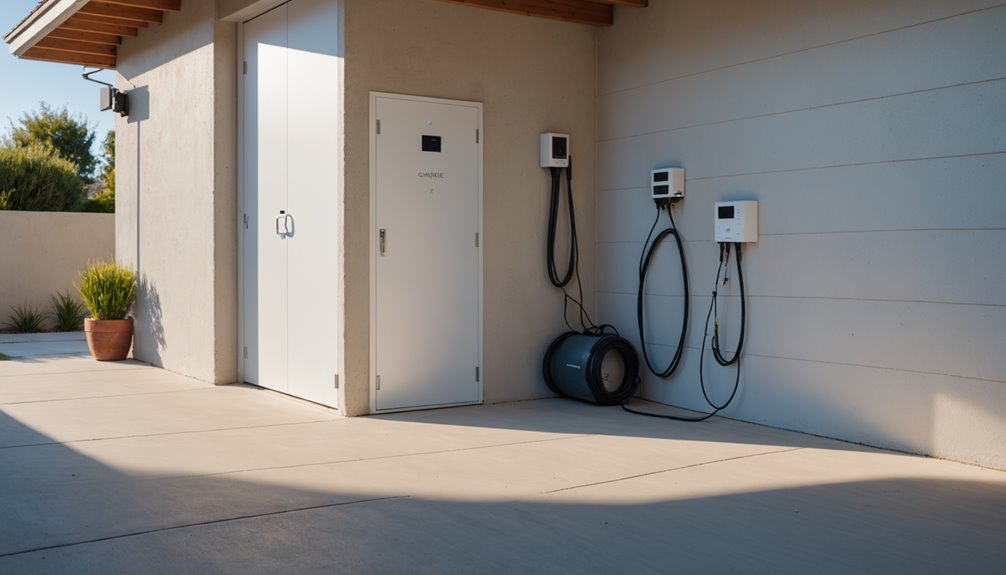
Selecting a battery backup system requires evaluating household energy consumption, available budget, and anticipated duration of grid independence. The EcoFlow Delta Pro Ultra offers scalable capacity ranging from 6kWh to 90kWh, with thermal management designed to function reliably in high-temperature conditions common during California heat events. Tesla’s Powerwall provides 13.5kWh of storage capacity and carries a 10-year warranty. For households requiring whole-home power coverage during extended outages, the Generac 24kW Guardian generator represents a generator-based alternative, with costs ranging from $6,398 to $8,233 before installation. Battery systems that integrate with smart panels allow users to allocate power to designated priority circuits, maintaining power to essential loads such as medical equipment, refrigeration, and lighting when grid supply is interrupted.
Leasing vs. Buying a Home Battery Backup in California
Leasing and purchasing a home battery backup system each come with distinct financial and practical implications. A lease typically requires $0–$5,000 upfront, making it more accessible for homeowners with budget constraints or modest backup power requirements. Purchasing, by contrast, involves a higher initial investment of $10,000–$20,000, including installation costs.
From a financial standpoint, leasing can provide access to certain tax-credit advantages without requiring full capital outlay, though the arrangement may limit the homeowner’s ability to make upgrades or modifications without lessor approval. Ownership transfers full control to the homeowner, allowing for system modifications at will, potential increases in property value, and greater long-term cost savings as the system operates without ongoing lease payments.
Warranty coverage is comparable across both arrangements, generally ranging from 10 to 15 years regardless of ownership structure.
The decision largely depends on individual financial circumstances and energy needs. Leasing is a practical option for those with limited upfront capital or lower backup power demands. Purchasing is generally the more cost-effective choice over time for homeowners who can manage the initial expenditure and want greater autonomy over their energy infrastructure.